
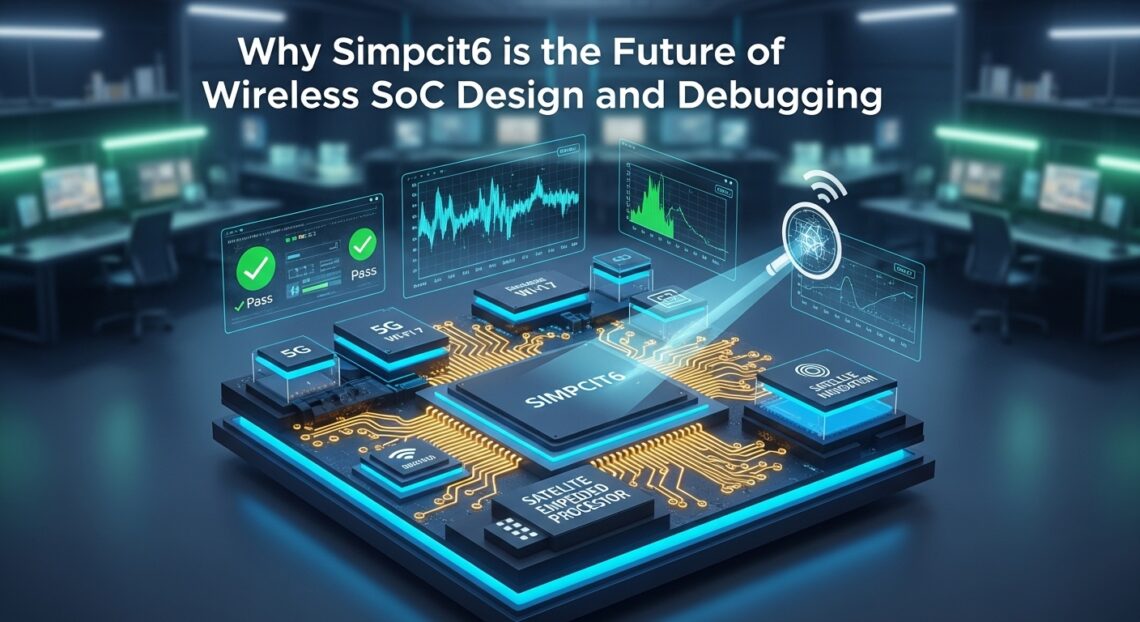
The world of embedded systems and Internet of Things (IoT) development is notoriously complex. Developers often find themselves wrestling with fragmented toolchains, inefficient debugging processes, and software that simply cannot keep up with the rapid evolution of hardware. In this challenging landscape, a term has begun surfacing in technical forums and developer roadmaps: Simpcit6. While the spelling may appear unconventional at first glance, it points directly to one of the most significant shifts in modern engineering tools. This article explores the depths of what Simpcit6 represents, its core architectural philosophy, and why it matters for the future of connected devices.
Simpcit6 is not just another incremental software update; it represents a fundamental rethinking of how engineers interact with silicon. As we move toward a future dominated by artificial intelligence at the edge, stringent security requirements, and the demand for ultra-low power consumption, the tools we use must evolve dramatically. By moving away from monolithic, resource-heavy integrated development environments (IDEs) toward a modular, flexible architecture, Simpcit6 is setting a new standard. Whether you are a hobbyist working on a smart home sensor or a professional engineer deploying thousands of industrial units, understanding this platform is becoming essential.
What is Simpcit6?
Simpcit6 is the colloquial or search-friendly reference to the latest evolution of a premier development platform designed specifically for high-performance wireless SoCs (System on Chips) and MCUs (Microcontroller Units). In official documentation, this is known as Simplicity Studio 6, a next-generation software development kit (SDK) and tool suite aimed at simplifying the complexities of modern IoT device creation. Unlike previous iterations that locked developers into a specific vendor environment, Simpcit6 champions an open ecosystem. It allows engineers to use their preferred tools while still accessing the deep hardware optimization features necessary for professional-grade products.
At its core, Simpcit6 is built to support the transition from legacy hardware to modern, multi-core, and highly secure architectures. It supports a wide range of wireless protocols, including Bluetooth LE, Wi-Fi, Zigbee, Thread, Matter, and proprietary protocols. The platform introduces a modular SDK system, which means developers no longer need to download massive, all-encompassing packages. Instead, they can pull only the components required for their specific project. This shift reduces installation times from hours to minutes and significantly lowers the barrier to entry for new developers. Furthermore, it provides a bridge between the widely adopted second-generation wireless platforms and the newly emerging third-generation platforms that promise 100x improvements in AI/ML performance.
The Architecture: Modularity and Speed
One of the most significant pain points for embedded developers has always been the bloatware associated with vendor-specific tools. Traditional IDEs often force users to install hundreds of gigabytes of drivers, toolchains, and examples, regardless of whether they are needed. Simpcit6 demolishes this model through a modular architecture driven by a new Simplicity Installer and Conan package management system. This approach ensures that the development environment remains lightweight and responsive. The “Simpcit6” experience is characterized by fast boot-up times, rapid compilation, and a user interface that does not feel sluggish, even on standard laptops.
Behind the scenes, the platform decouples the IDE from the productivity tools. In the past, if you wanted to use a specific code editor, you often lost access to powerful debugging features like the Energy Profiler or Network Analyzer. Simpcit6 changes this by making these analysis tools standalone applications. You can now run the Energy Profiler independently to measure current consumption in the nanoamp range, or use the Network Analyzer to debug complex packet collisions, all without opening the main IDE. This separation of concerns allows for a highly customized workflow, catering to the reality that modern engineering teams use a diverse set of tools to bring products to life.
Core Features and Functionality
Simpcit6 introduces a suite of advanced analysis tools that go far beyond simple “blink an LED” functionality. For developers working on precision applications, the inclusion of an AoA (Angle of Arrival) Analyzer and a Channel Sounding Analyzer is a game-changer. These tools allow engineers to fine-tune location-based services and ranging accuracy, which is critical for indoor navigation and asset tracking. The platform also includes an AI/ML Model Profiler, specifically optimized for TensorFlow Lite for Microcontrollers (TFLM). This tool provides a visual breakdown of how neural networks execute on the hardware, identifying bottlenecks in the Cortex-M CPU versus the dedicated Matrix Vector Processor.
Another standout feature is the enhanced security integration. With the rise of cyber-physical systems, security cannot be an afterthought. Simpcit6 leverages the Secure Vault technology, which is among the first to achieve PSA Level 3 certification. The toolchain includes automated security testing features that verify TrustZone configurations and ensure that private keys and certificates are handled correctly. For developers working on firmware over-the-air (FOTA) updates, the platform supports differential DFU (Delta Firmware Updates). This feature stores delta information in RAM rather than requiring a massive scratchpad in flash memory, drastically reducing the storage footprint required for secure updates.
Why the Shift Matters for IoT
The Internet of Things is currently at a crossroads. The early promise of “everything connected” has collided with the harsh reality of power management, interoperability, and maintenance. Simpcit6 directly addresses the interoperability crisis through its support for standards like Matter and Amazon Sidewalk. By providing certified examples and a standardized API layer, the platform reduces the risk of fragmentation. Developers can now write an application for a Matter-compliant light bulb, and Simpcit6 ensures that the underlying wireless protocol stack behaves exactly as the standard requires, removing the guesswork from certification testing.
Furthermore, the platform addresses the economic realities of IoT deployment. Battery life is often the single most critical feature for a wireless sensor. Simpcit6 includes updated power calculators and RAIL (Radio Abstraction Interface Layer) enhancements that allow for fine-grained control over RF sense sensitivity and sleep modes. Tools like the Wi-Fi Power Estimator allow engineers to model battery life before the hardware is even manufactured. This shift from “code and hope” to “simulate and verify” saves millions of dollars in potential hardware respins and field maintenance, making the IoT business model more sustainable.
Comparison with Legacy Development Environments
For those accustomed to Simplicity Studio 5 or other vendor-specific IDEs like Keil or IAR, the transition to Simpcit6 represents a cultural shift. The most obvious change is the full embrace of Visual Studio Code (VS Code). The platform offers a robust VS Code extension that supports editing, compiling, flashing, and debugging. This contrasts sharply with older environments that forced developers to use a proprietary editor with limited plugin ecosystems. Simpcit6 allows teams to use modern source control integrations, co-pilot AI assistance, and live share debugging within VS Code, while still having the Silicon Labs hardware hooks available in the background.
Performance metrics also heavily favor the new platform. Legacy systems often suffered from “project sprawl,” where copying a project meant duplicating gigabytes of SDK files. Simpcit6 utilizes a symbolic link and manifest system where SDKs are referenced globally. This means a team of ten developers can share a single copy of the SDK on a build server, dramatically reducing disk usage and compile times. Additionally, the new SDK architecture has moved away from a monolithic GitHub repository to a component-based model, allowing for continuous integration pipelines that trigger builds only when relevant components change, rather than rebuilding the entire universe for a single driver update.
Getting Started and Availability
Adopting Simpcit6 is designed to be straightforward, especially for those familiar with modern software workflows. The public beta of the platform is currently available, with the full production release having rolled out in late 2025. To get started, developers need to download the new Simplicity Installer. This lightweight tool acts as a package manager, allowing you to select which specific SDKs (like the Simplicity SDK or the Gecko SDK) and hardware configurations you need. The installation process is non-invasive, meaning it can coexist with older versions of development tools on the same machine, allowing for a gradual migration path for legacy projects.
For those looking to test the waters, the platform offers extensive hardware support ranging from the xG22, xG24, to the latest xG26 and SiWx917 wireless SoCs. The documentation has also been overhauled, moving away from static PDFs to a dynamic, web-based structure that is updated in real-time. New users will find “Developer Journeys” curated guides that walk you through the specific steps for technologies like Amazon Sidewalk or Matter, from zero to a certified prototype. This educational component lowers the learning curve significantly, making high-end wireless development accessible to a broader audience than ever before.
Conclusion
Simpcit6 represents more than just a software update; it is a philosophical realignment of how hardware development should be done in the 21st century. By prioritizing modularity, developer choice, and deep analytical insights, it solves the productivity crisis that has long plagued the embedded industry. The move to support standard IDEs like VS Code, combined with standalone power and network analysis tools, empowers engineers to build better products faster. As the industry shifts toward the third generation of wireless platforms with integrated AI acceleration, having a toolchain that can handle this complexity without adding friction is not a luxury it is a necessity.
The future of the IoT relies on the ability to iterate quickly, secure devices remotely, and push the boundaries of battery life. With its robust feature set for Matter, AI/ML profiling, and advanced security validation, Simpcit6 is poised to be the backbone of this future. For developers sitting on the fence, the time to migrate is now. The platform is mature, the ecosystem is growing, and the benefits in terms of time-to-market and code quality are undeniable. Whether you are designing the next generation of smart home gadgets or industrial sensors, Simpcit6 provides the toolkit you need to turn your vision into reality.